Materials · 21 April 2026 · 6 min read
Choosing Materials That Age Beautifully
Some materials look their best on the day they are installed. The better ones look their best a decade later.
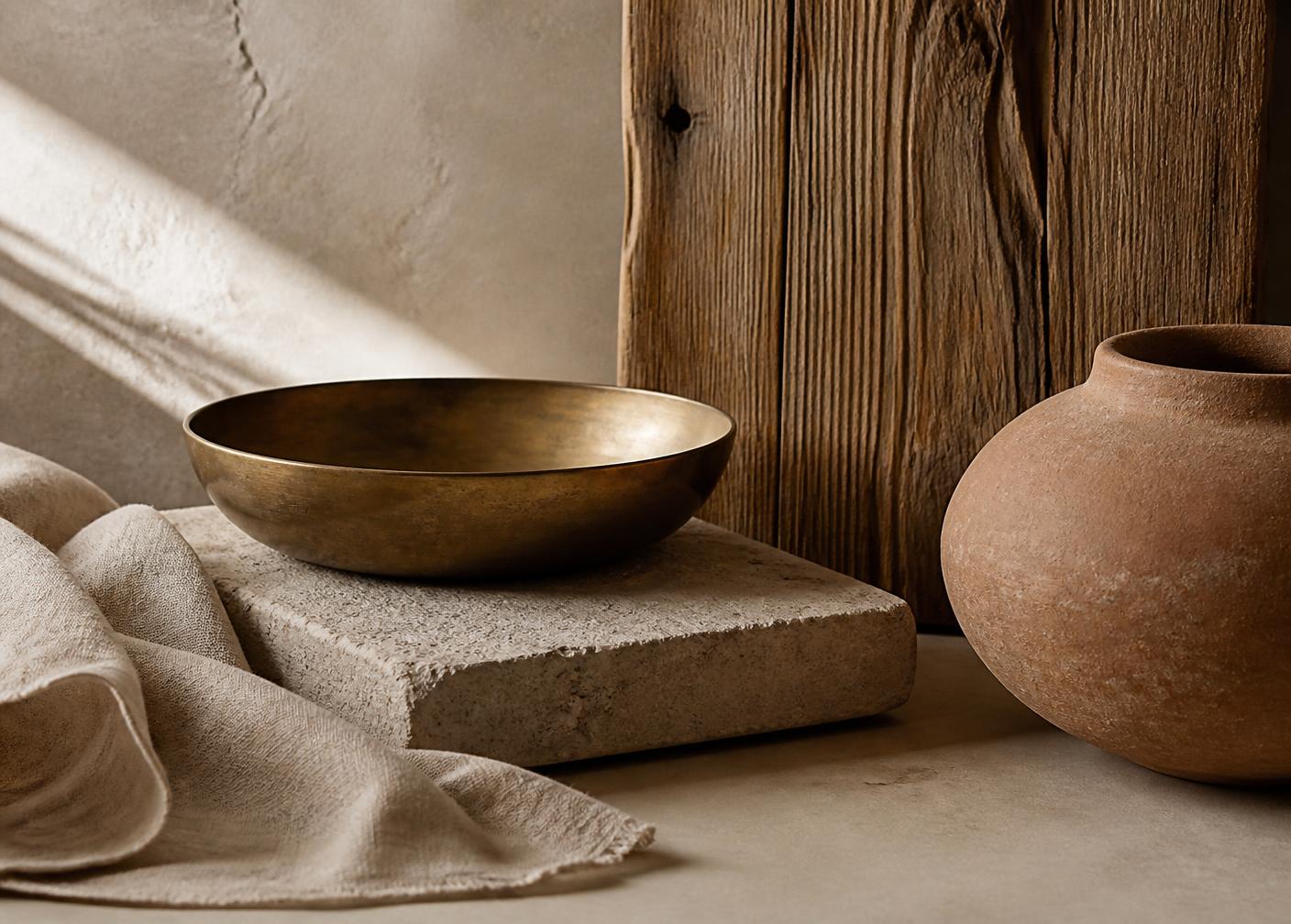
Materiality is where interior design and architecture meet. A finish is not only a colour — it is a surface that will be touched, cleaned, scratched and lived against for years. The honest question to ask of any sample is not whether it is beautiful today, but what it will look like in 2036.
Materials that improve
These develop character with use rather than looking worn:
- Solid and veneered hardwoods, which deepen in tone
- Unlacquered brass, which builds a soft patina
- Lime and clay plaster, which absorb marks into their texture
- Natural stone with honed rather than polished finishes
- Linen and wool, which soften with washing and use
- Terracotta and unglazed ceramic
Materials that only decline
High-gloss laminate, thin printed surfaces and anything with a decorative film applied over a substrate will look their absolute best on day one. Every day afterwards is a small subtraction.
Match the material to the traffic
A honed limestone that ages gracefully in a bedroom will stain in a kitchen. Ageing well is contextual: it depends on what happens in the room, who uses it and how it will realistically be maintained.
Buy fewer materials, better
A restrained palette lets you spend more per square metre on each surface. Four excellent materials will always outperform ten adequate ones, visually and in the long run financially.